Ten years without "El cine de lo que yo te diga"
Today marks ten years since the last episode of my favourite radio show aired. It was called "El cine en la SER," although everyone knew it as "El cine de lo que yo te diga" (The Cinema of Whatever I Tell You). This programme was broadcast by the station named in its title, if football allowed it, on Saturday afternoons. If not, you could still listen to the entire programme again from 1 to 3 am that same night. The programme, hosted by Carlos López-Tapia, with journalists Antonio Martínez, Elio Castro, Juan Zavala, Diana Pérez, and María Guerra, talked about cinema in an informal way, with complete and detailed information interspersed with humorous sketches. The programme always started with an analysis of the most important film of the week, provided news related to the film industry, had a section for listeners' questions, and featured reports on the history of cinema, soundtracks, or books, or from festivals. They would call Raimundo Hollywood every week, a Spaniard who worked in the mecca of cinema and who, under that pseudonym, told the rumours and gossip that were brewing there (much later I discovered that it was Raúl García, the animator who drew the genie in Disney's version of Aladdin). The programme always ended with reviews of the feature films released during the week by Teófilo el Necrófilo, a psychopathic child played by actress Gloria Núñez who was Hannibal Lecter's nephew and had no mercy with his ratings. All this may sound a bit strange, but the programme was so original and so well done that everything made sense. They also did special programmes broadcasting the Goya Awards or the Oscars and at Christmas they prepared very crazy programmes with their own awards for the best moments of the year.
Thank God, the internet exists today, but before, when you grew up in a small city like Ávila, which is the city where I grew up, the sources of information available were very limited. If you had a hobby, you had to resort to specialised magazines, which for a penniless newbie, you usually read in the library. For example, if you liked music, in addition to the aforementioned library (besides, I don't think the music section of the library was inaugurated until the 2000s), you could go to one of the two or three record stores in the city, or to a mail-order catalogue like Discoplay or BID. If you didn't have money, then you could go to the stalls of copied tapes that were in the flea market or resort to a friend with contacts in Madrid, or who lived in a flat high enough to receive the signal of the 40 principales or M80 from Valladolid, since in small cities like Ávila, except for Radio 3 (with its strange programming, where after a heavy metal programme, you could just as easily get a folk music programme), there were no other music stations (later Cadena Dial was installed and when I was about to finish high school, Onda Cero música, which was the embryo of Kiss FM). The same thing happened to film fans. In Ávila there was only one cinema with a single screen (the Tomás Luis de Vitoria, which was also the assembly hall of a school) and the films sometimes arrived late (I finished the Jurassic Park sticker collection before the film was released) and many times they didn't arrive at all. You also had video clubs and magazines like Fotogramas and later Cinemanía. Again, the best source of information was the public library, where they had a lot of books about cinema, many specialised magazines (like Cahiers du cinema) and at the same time as the music library was inaugurated, the film library was also inaugurated, where you could borrow VHS tapes.
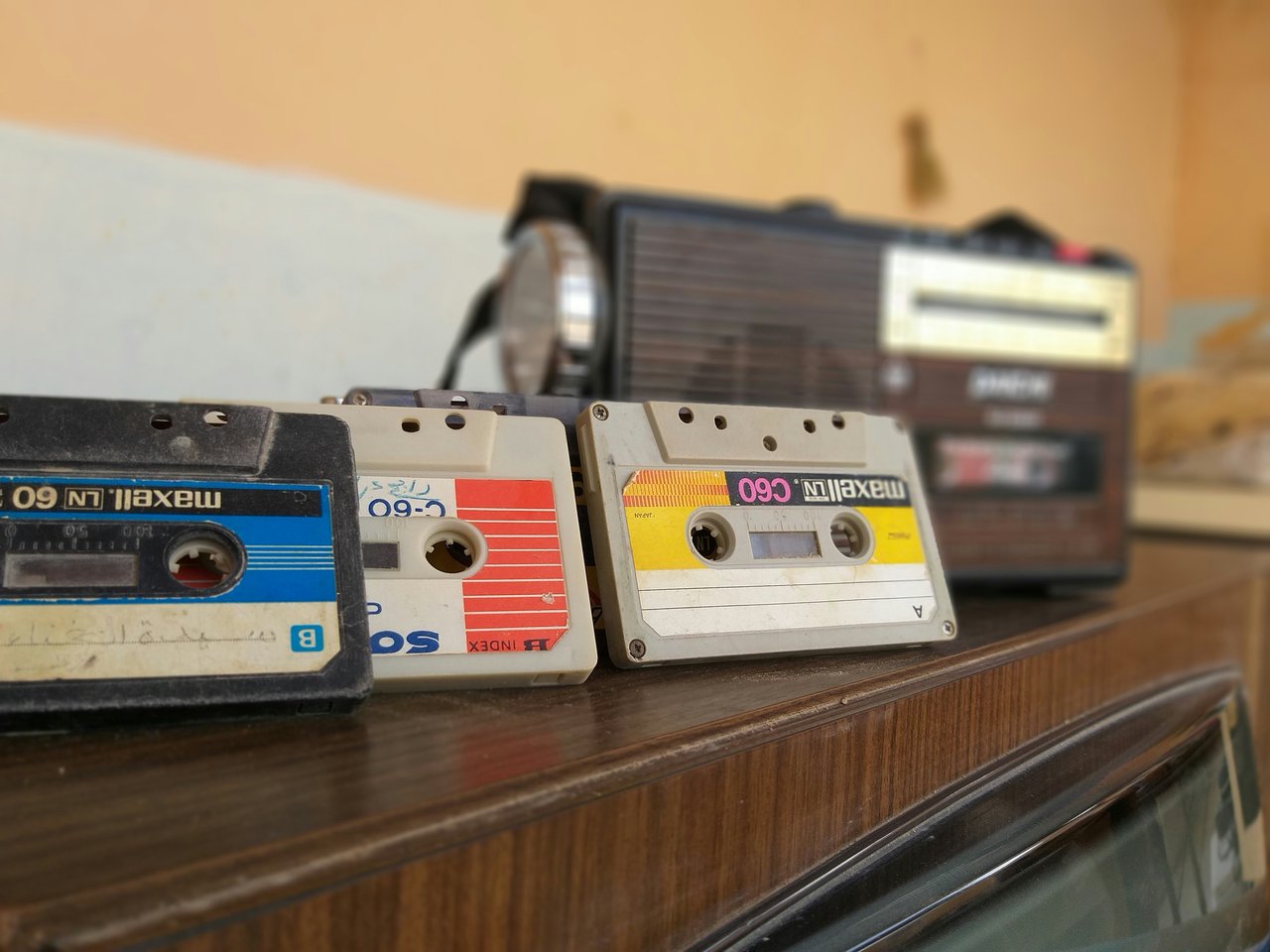
That's why sources of information like "El cine de lo que yo te diga" were so important. I discovered it one night shortly after receiving a radio alarm clock for my 11th birthday. I immediately became addicted and on Saturday afternoons, in a 90s ritual, I would put on my Walkman headphones to listen to it. But of course, as I said before, if there was football, the sports roundup had priority and only half the programme was broadcast. So, as a kind of prehistoric podcast, I would stay awake until the programme started at one o'clock and I would record it with two 60-minute cassette tapes. Of course, I had to set the alarm for one and a half to turn the tape over, at two to change tapes, and at two and a half to turn the second tape over. Then, satisfied, I would listen to the tapes several times throughout the week, like when I was walking to school. One day, during a private lesson, I discovered that there were 120-minute cassette tapes. This discovery greatly simplified my routine, because I only had to wake up once to turn the tape over. On one occasion I called the listener's question section, but it turned out that the phone number was the same as the journalists' office and Elio Castro answered. I was petrified and couldn't speak (I would have been 13 or 14 years old), so the announcer told me that if I wanted to leave a question I should hang up and call back, that he wouldn't pick up the phone so that the answering machine would pick up. Without saying a word, I hung up and never called back. One last anecdote: In 2000, some of the journalists from "El cine de lo que yo te diga" wrote a book called "El cine contado con sencillez" which became my first internet purchase, since the bookstores in Ávila didn't have it.
"El cine de lo que yo te diga" has accompanied me ever since. I continued listening to it during college (I lived right above the Van Dyck cinemas in Salamanca) and I didn't miss it either during the two years I lived in Germany (you could already listen to the radio over the internet). In March 2009, a rumour circulated on an internet forum that the programme was going to air for the last time. The rumours were confirmed very soon after. The economic crisis was hitting hard and Cadena SER didn't want to continue maintaining such an expensive programme to produce (I think the team had their own offices outside the station headquarters). So exactly ten years ago today, the journalists from "El cine" said goodbye to their listeners while this Cola Jet Set song played:
Despite the passage of time, I still miss the programme. Thankfully, we have, as a kind of methadone, the programmes that Antonio Martinez and Elio Castro have done again for the SER in collaboration with the TCM television channel. They started with "Notas de Cine" about music in films, and a few seasons later the space became "Sucedió una noche", a programme dedicated exclusively to classic cinema that still continues. Like "El cine", this programme is also broadcast in the early hours of the morning, although now you can download the podcast!
Source of the image of the tapes: unsplash.com. Author: Ar Meftah
|
Next post: Early career extravaganza party |
Previous post: 22 Dec 18: Our Work Featured in The Economist |