March 18: In Ortega’s Footsteps
When I was in Dresden, I read Cartas de un joven español, a book containing the letters that José Ortega y Gasset wrote to his parents and his girlfriend while studying in Germany. (Since the book was out of print, Dani borrowed it from the library of the Casa de las Conchas, photocopied it at a shop in Salamanca’s Plaza Mayor, and brought it to me in Bielefeld.)
What surprised me most about his correspondence is that, a century after he wrote it, nothing has changed in Germany (nor in Spain…), and in 2006 I had the same problems that Ortega had in 1906.
In one letter, just after moving from Leipzig to Berlin, Ortega gave his girlfriend his new address in the capital: Krausenstrasse 61 – III r. Ever since reading that, I had wanted to visit the house, and this weekend I tried. When I looked up the address on the Falk city map hanging on the wall of my room, I already realised it would be very unlikely that any building from that period would still be standing. It’s in the Mitte district, near Friedrichstrasse—an area heavily bombed during the Second World War. Being close to Checkpoint Charlie, in what used to be the socialist sector, meant that the chances of the house having even been reconstructed were slim to none.
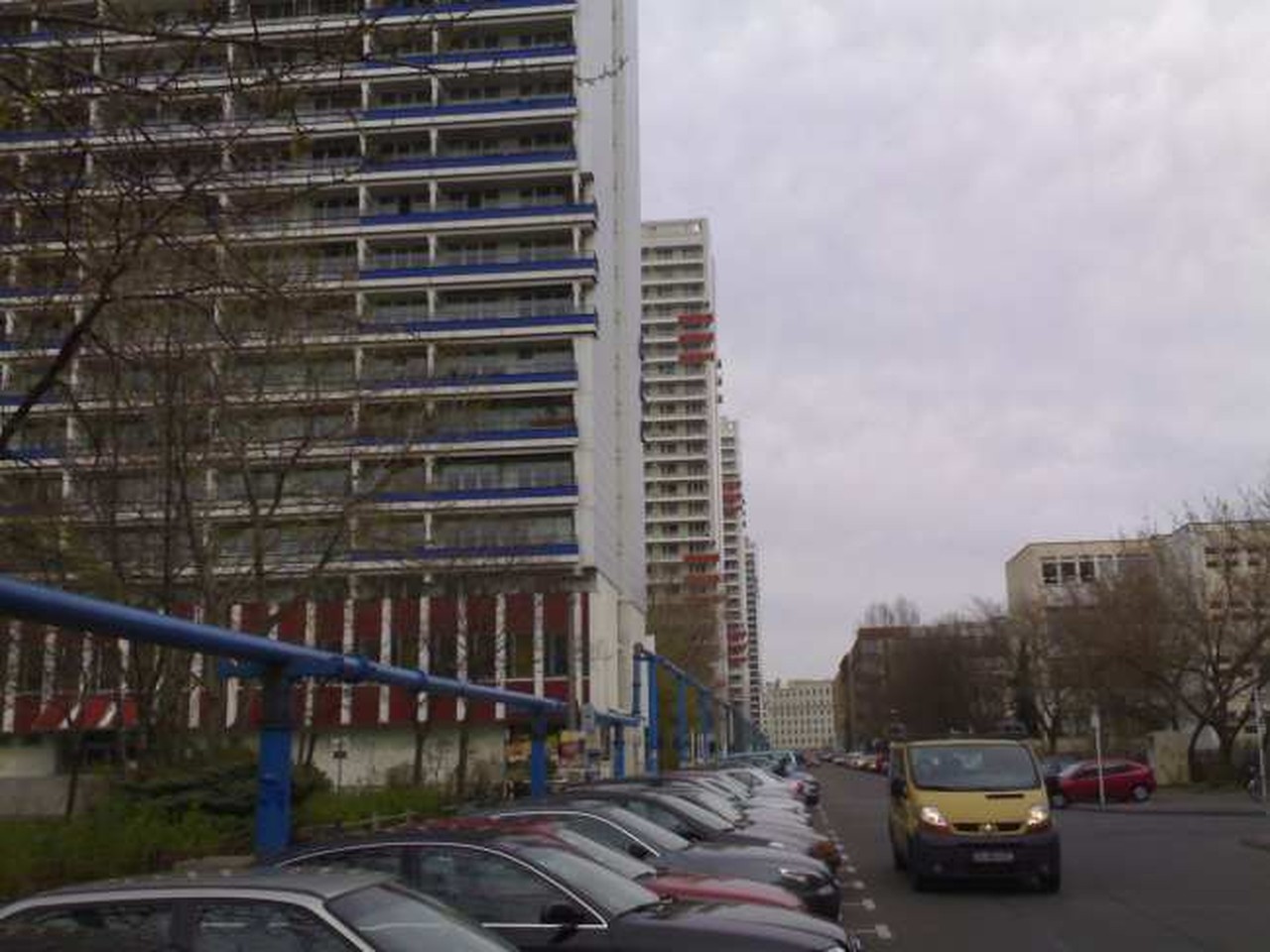
Taking advantage of the “good weather,” I walked there this morning from Alexanderplatz and confirmed that almost nothing remained of the street Ortega would have known. In its place stand apartment blocks with a “Benidorm-style” architecture, a memorial park, and some rather ugly ministerial buildings.
You can get a sense of the Berlin architecture Ortega must have lived among during the Second German Empire by looking at the Wolff Building at Krausenstrasse 17. The building was inaugurated a couple of years after his stay in the capital and survived the war. Opulent, it shares its history with that of Germany itself. Built as the department store of one of Berlin’s oldest fashion firms, its owner—the Jewish businessman Victor Wolff—was forced to sell it at a knockdown price to the imperial railways of Nazi Germany. After reunification, the heirs recovered the property, later sold it to the German government, and it now houses offices.
Ortega once wrote:
“The pacifist sees in war a harm, a crime, or a vice. But he forgets that, before that and above that, war is a tremendous effort made by men to resolve certain conflicts. War is not an instinct, but an invention. Animals know nothing of it; it is a purely human institution, like science or administration.”
What an invention.
|
Next post: April 10: What Colour Is the Sky? |
Previous post: February 22: 2008 Elections |